Jared Kushner Just Threw Donald Trump Jr. Under the Bus.
Bigly.
By Greg Sargent, The Washington Post
24 July 17
residential son-in-law Jared Kushner is set to testify before the Senate Intelligence Committee this morning, and what is striking about his extensive opening statement is the degree to which it seeks to insulate Kushner himself from any culpability or responsibility for the problematic known facts about the Russia affair — particularly the known facts that concern Donald Trump Jr.
Kushner’s statement takes exceptional care to separate him, with scalpel-like precision, from the now-notorious meeting that Trump Jr. arranged with a Russian lawyer — a meeting that Trump Jr. had been informed would furnish the Trump campaign with information about Hillary Clinton supplied by the Russian government. Here is what Kushner’s statement says about the meeting (emphasis added):
In June 2016, my brother-in-law, Donald Trump Jr. asked if I was free to stop by a meeting on June 9 at 3:00 p.m. The campaign was headquartered in the same building as his office in Trump Tower, and it was common for each of us to swing by the other’s meetings when requested. He eventually sent me his own email changing the time of the meeting to 4:00 p.m. That email was on top of a long back and forth that I did not read at the time. As I did with most emails when I was working remotely, I quickly reviewed on my iPhone the relevant message that the meeting would occur at 4:00 PM at his office. Documents confirm my memory that this was calendared as “Meeting: Don Jr.| Jared Kushner.” No one else was mentioned.
I arrived at the meeting a little late. When I got there, the person who has since been identified as a Russian attorney was talking about the issue of a ban on U.S. adoptions of Russian children. I had no idea why that topic was being raised and quickly determined that my time was not well-spent at this meeting. Reviewing emails recently confirmed my memory that the meeting was a waste of our time and that, in looking for a polite way to leave and get back to my work, I actually emailed an assistant from the meeting after I had been there for ten or so minutes and wrote “Can u pls call me on my cell? Need excuse to get out of meeting.”
I had not met the attorney before the meeting nor spoken with her since. I thought nothing more of this short meeting until it came to my attention recently. I did not read or recall this email exchange before it was shown to me by my lawyers when reviewing documents for submission to the committees. No part of the meeting I attended included anything about the campaign, there was no follow up to the meeting that I am aware of, I do not recall how many people were there (or their names), and I have no knowledge of any documents being offered or accepted. Finally, after seeing the email, I disclosed this meeting prior to it being reported in the press on a supplement to my security clearance form, even if that was not required as meeting the definitions of the form.
It’s not entirely clear that the “long back and forth” that Kushner claims he “did not read at the time” is the email chain that Trump Jr. released, under duress, which demonstrated that the meeting was taken with the express purpose of getting information advertised as coming from the Russian government. But it seems clear that this is what he is referring to. Note that Kushner does not say one way or the other whether he had been sent this email chain before. What we do know, however, is that Kushner says he never read it. And if Kushner is to be believed, he agreed to, and showed up at, this meeting without having any idea why it was being held.
This, even though Trump Jr. was quite excited about what this meeting might yield (“I love it,” Trump Jr. exulted in the email chain), and even though Trump’s then-campaign chair Paul Manafort was also present. This was a meeting attended by Trump’s top brain trust, on the expectation that it would yield greatly damaging information about Trump’s opponent, just as the campaign was shifting into general election mode — but Kushner was unaware of its purpose.
Also note the exceptional care that went into Kushner’s characterization of the meeting. He claims he arrived just late enough to miss the incriminating part of the meeting. Trump Jr. admitted in his second statement that the Russian lawyer brought up the campaign (after an initial statement claiming the meeting was just about Russian adoptions):
After pleasantries were exchanged, the woman stated that she had information that individuals connected to Russia were funding the Democratic National Committee and supporting Ms. Clinton.
Kushner’s statement does not deny outright either that the meeting did address the campaign or that any documents had been offered to the Trump camp, which the email chain appears to confirm. All it does is insulate Kushner from those facts.
It is certainly possible that Kushner’s account is accurate. But these things are now investigable: Efforts can be made to determine whether Kushner had been told of, or discussed, the purpose of the meeting beforehand, and to determine whether he arrived just late enough to miss the part of the meeting that concerned the campaign.
But whatever the truth turns out to be on those fronts, what Kushner’s statement does not do is contest any of the known facts about that meeting — known facts that are deeply problematic for Trump Jr. and even for Trump himself. The meeting, at a minimum, shows that Trump Jr. was eager to collude with the Russian government, which, he had been told, was trying to get his father elected president. Kushner’s statement denies any collusion on his own part, and claims no awareness of any other collusion:
I did not collude, nor know of anyone else in the campaign who colluded, with any foreign government.
Of course, what Trump Jr.’s email chain showed is that the campaign jumped at the chance to collude, even if it ended up not happening at that meeting. Recall that Trump Jr.’s original statement covered up the real reason for the meeting, and that President Trump himself reportedly signed off on that initial false statement, which means the president actively participated in an effort to mislead the country about his own campaign’s eagerness to collude with Russia to help him win. Kushner’s statement offers nothing to challenge these underlying facts. It just separates him from them.
Robert Mueller Has Just Started Turning Over Rocks and the Critters Are Already Crawling Out
Written by <a href="index.php?option=com_comprofiler&task=userProfile&user=40776"><span class="small">Dan Rather, Dan Rather's Facebook Page</span></a>
Monday, 24 July 2017 08:39
Rather writes: "It's the first thing you learn as a new
police detective, a beginning prosecutor, or a cub reporter. And it's a
lesson you dare not forget. Money is often the fuse that ties the smoke
to the fire."
Former FBI Director Robert Mueller. (photo: Getty Images)
Robert Mueller Has Just Started Turning Over Rocks and
the Critters Are Already Crawling Out
By Dan Rather, Dan Rather's Facebook Page
24 July 17
ollow the money!"
It's the first thing you learn as a new police detective, a beginning prosecutor, or a cub reporter. And it's a lesson you dare not forget. Money is often the fuse that ties the smoke to the fire.
Stellar reporting from Bloomberg that the Special Counsel Robert Mueller is looking at a wide expanse of President Trump and his family's business dealings is a big development and one that has, and should have, Mr. Trump feeling the heat.
The more you dig into the digits, the more you are likely to find inconsistencies or much worse, especially in a freewheeling and never scrutinized family real estate empire like Mr. Trump's.
Remember how defiantly the President has refused to release his tax returns. Remember the "red line" on just this scope of inquiry that he laid out in his interview yesterday with the New York Times. Remember all the shady associations with Russian money and his descent into - and remarkable resurrection from - bankruptcy. Remember that it was just reported that former campaign manager Paul Manafort was in debt 17 million dollars to Russian interests before he took a job with the Trump campaign. (I gave you a few extra spaces after the period to let that fact sink in).
Trump has categorically denied any collusion with Russia, or even knowledge of any of the high level conversations between his family and staff and representatives of the nation that attacked our democracy. Mr. Trump's credibility right now is not exactly rock solid, but even granting this is the case, what happens when the spotlight turns to hard evidence in dollars and cents?
When you turn over a rock, you can't put back all the critters that start crawling out.
Top Five Rogues Pardoned by Presidents; Will Trump Try to Be 6th?
Sunday, 23 July 2017 13:23
Cole writes: "Trump has been tweeting again, this time
about his unlimited ability to pardon people according to the Constitution."
Donald Trump. (photo: AP)
Top Five Rogues Pardoned by Presidents; Will Trump Try
to Be 6th?
By Juan Cole, Informed Comment
23 July 17
rump has been tweeting again, this time about his unlimited ability to pardon people according to the Constitution. That part is correct. He seems to be talking about pardoning himself, though, which the Constitution does not allow him to do. Also, what is he guilty about that he’s mentioning this issue?
Presidential pardons have often been controversial or even sleazy. Here are my favorite five in the rogues’ gallery.
1. The pirates Pierre and Jean Laffite. They had a blacksmith shop in New Orleans that they used as a front for smuggling and slaving. They also had a colony at Barataria south of the city. They preyed on Spanish vessels. The British tried to recruit them during the War of 1812, but they were loyal to the United States and took the information to the governor of Louisiana. He refused to ally with them, and actually sent troops to try to wipe out the Barataria colony, but he just roughed it up a bit. Then the Laffite brothers approached Andrew Jackson, as two rogues to another. I once had dinner with another historian at a restaurant in the French Quarter that claims it is the site of a meeting of Jackson and Pierre Laffite. Who knows? Jackson welcomed the pirates to his war effort, and they and their men distinguished themselves. President James Madison pardoned them on February 6, 1815. They went back to a life of piracy and crime. I think we’re back to being in a Jacksonian moment.
Pirate Laffite
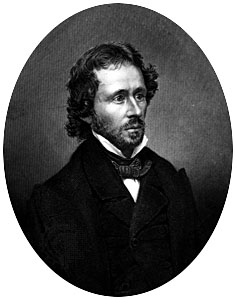
2. John C. Fremont, freebooter, who helped steal California from Mexico, got it into his head that he was its military governor. The actual military governor sent out by Washington DC minded, and had Fremont clapped in chains. President James K. Polk pardoned him, and Fremont unsuccessfully ran for president in 1856.
Fremont
3. Jefferson Davis, president of the Confederacy and the biggest traitor America has ever known, responsible for the deaths of 620,000 dead soldiers on both sides, and for the continued enslavement of millions of human beings after President Lincoln’s Emancipation Proclamation. He was captured in 1865 and kept in chains. Andrew Johnson pardoned him in late 1868.
4. Tricky Dick Nixon. Nixon had the Democratic National Headquarters in the Watergate building broken into by the covert team, the “plumbers,” and burgled *twice*; plus he had the offices wiretapped.. He was trying to hack the 1972 election. Archibald Cox was appointed as special counsel to investigate Watergate. Nixon told his Attorney-General, Elliot Richardson, to fire Cox, but Richardson declined and Nixon fired him. Then the deputy attorney general also refused to fire Cox. Ultimately Robert Bork agreed to fire Cox, which probably cost him a seat on the Supreme Court at a much later time. The firing was ultimately ruled illegal. Gee I guess the president can’t fire a special prosecutor at will and for no cause. Gerald Ford pardoned Nixon after the latter resigned and Ford, his appointed vice president, succeeded him. The pardon was not well received and may have contributed to Ford’s loss in 1976 to Jimmy Carter.
5. Marc Rich was a very wealthy businessman. In 1979 Iran made its Islamic revolution against the corrupt megalomaniac Mohammad Reza Shah. Later in that year, fanatics took US embassy personnel hostage. The 1979 revolution put Israel in a difficult position because Iran had been an important supplier of petroleum to that country. The Arab League had a boycott on Israel. Marc Rich swung into action and from 1979 through the mid-1990s, he was involved in oil deals with Iran that ended up supplying Israel. The ayatollahs in Iran care more about the money than where the oil went. Trading Iranian petroleum was extremely illegal for a US citizen in those decades. Rich avoided prison by fleeing to Switzerland, but the FBI put him in its 10 most wanted list. Rich’s US-based wife Denise Rich, a popular song writer, donated over $1 million to the Bill Clinton campaign and was close to the Clintons. Then Israeli prime minister Ehud Barak interceded with Clinton for Rich from his side as well. Clinton had Eric Holder write the paperwork fro a pardon and issued it late in 2000 as he was going out of office. That pardon left a bad taste in many Americans’ mouths, since they have been trained to really hate the Iranians and Rich did business with them even during the hostage crisis.
Don Trump Jr. and several others in Trump’s circle may join this rogues’ gallery. They won’t be the first to be convicted and then pardoned for breaking the law on behalf of a candidate favored by a powerful foreign country.
And no the president can’t pardon himself or Nixon would have been first in line.
Pellittieri writes: "Ryan's plea that we all just calm
down-that we not 'base our arguments on emotion' and instead 'have a
great debate on ideas and principles' - feels like a willful
misunderstanding of the stakes that this administration has created."
Paul Ryan. (photo: Gary Cameron/Reuters)
Paul Ryan Doesn't Like It When We're Angry
By Mara Pellittieri, Talk Poverty
23 July 17
ast week, Speaker of the House and all-around nice guy Paul Ryan (R-WI) released a video and a statement asking Americans to be more civil to one another. It was part of a push for legislation that Rep. Charlie Crist (D-FL) introduced a month ago to make July 12 a National Day of Civility. The bill, which was offered in response to the shooting that critically injured House Majority Whip Steve Scalise (R-LA) and three others, encourages Americans to “be more respectful and polite to others in daily life.”
On the one hand, I can’t think of anything more American than responding to a mass shooting with a bill that suggests that everyone should remember to say “please” and “thank you.” But on the other, Ryan’s plea that we all just calm down—that we not “base our arguments on emotion” and instead “have a great debate on ideas and principles”—feels like a willful misunderstanding of the stakes that this administration has created.
In the past six months, this administration has pushed hard to dismantle the health care system. It is rolling back financial and environmental regulations, undercutting public schools, and hacking away at the legal system. It has been actively hostile to immigrants, tried to defund Planned Parenthood, and responded to the police shootings of 547 Americans by suggesting that the officers “choked.” These aren’t “ideas and principles” that we can chat about while we wait for someone to tap the next keg. They’re people’s lives. These policies will be felt intensely, and immediately, by the people that Speaker Ryan governs. And as long as the stakes are this high, I—respectfully—decline to be polite.
Politeness is a luxury, and it’s one that most Americans cannot afford. Polite people can raise their hand and wait quietly, confident that they will be called on and have their voices heard. But most of us never get called on. So what Paul Ryan is seeing—what is bubbling to the surface in the absence of politeness—is anger. This administration’s policies are forcing people to fight for their lives, and we are really, really mad.
Our anger gives us power. Anger allows us to demand attention instead of just hoping for it, which makes it one of the best vehicles that citizens have to exercise their rights in a representative democracy. Anger brings millions of Americans to a march in the middle of winter, it fuels them as they climb to the top of a 270-foot crane, it keeps them on-message even when they are under arrest and being dragged away without their wheelchairs.
Our anger makes Paul Ryan uncomfortable, so he is framing it as if we are out of control. It’s a centuries-old tactic to dismiss and discredit our rage. We saw it when Sen. Elizabeth Warren (D-MA) was silenced for reading a letter, and when Sen. Kamala Harris (D-CA) was told her questions were too aggressive. We see it when a protest is called a riot, and when a politician refuses to engage with a constituent who is “too emotional.”
So I am sorry, Speaker Ryan, if you don’t like the way we’re talking. But we don’t like the way you’re governing, and we’re going to make you listen to what we have to say about it.
Hart writes: "As Republicans fumble around in the dark trying to repeal the Affordable Care Act, the law has never been more well-liked."
Sen. Mitch McConnell. (photo: AP)
Obamacare and the Limits of Propaganda
By Benjamin Hart, New York Magazine
23 July 17
s Republicans fumble around in the dark trying to repeal the Affordable Care Act, the law has never been more well-liked. Poll after poll shows that Americans widely prefer Obamacare to the various sadistic plans Republicans have put forward to replace it. Until recently, the Affordable Care Act had struggled to gain widespread acceptance for a variety of reasons: nonstop scorched-earth opposition from the GOP; built-in American resistance to more government involvement in health care; a lackluster sales plan from President Obama and other Democrats; and the law’s actual shortcomings.
But once a Republican Congress and president possessed the power to actually destroy Obamacare, the party’s health-care hypocrisy was finally revealed for all to see. With its bumbling, bad-faith effort to take away health care from millions, the GOP has managed to do what Democrats never could — make the Affordable Care Act popular.
A New York Times article published on Friday offers a revealing glimpse into the minds of some average conservatives who once vehemently opposed the bill and now are lukewarm, at best, on the prospect of its destruction. For instance:
Five years ago, the Affordable Care Act had yet to begin its expansion of health insurance to millions of Americans, but Jeff Brahin was already stewing about it.
“It’s going to cost a fortune,” he said in an interview at the time.
This week, as Republican efforts to repeal the law known as Obamacare appeared all but dead, Mr. Brahin, a 58-year-old lawyer and self-described fiscal hawk, said his feelings had evolved.
“As much as I was against it,” he said, “at this point I’m against the repeal.”
“Now that you’ve insured an additional 20 million people, you can’t just take the insurance away from these people,” he added. “It’s just not the right thing to do.”
Another key vignette:
“I can’t even remember why I opposed it,” said Patrick Murphy, who owns Bagel Barrel, on a quaint and bustling street near Mr. Brahin’s law office here in Doylestown. He thought Democrats “jammed it down our throats,” and like Mr. Brahin, he worried about the growing deficit. But, he said, he has provided insurance for his own dozen or so employees since 1993.
“Everybody needs some sort of health insurance,” Mr. Murphy said. “They’re trying to repeal Obamacare but they don’t have anything in place.”
There’s more here than just the political truism that it’s almost impossible to take away an entitlement once it’s been bestowed. The reversal in public opinion cuts to the emptiness at the core of the national Republican agenda on this issue.
Ever since health-care legislation leapt to the front burner in 2009, Republicans have chosen to oppose the law in almost complete lockstep — not just as a policy difference, but as an affront to their sensibilities. (Several GOP governors have avoided this path, to their states’ benefit.)
As even enthusiastic supporters of Obamacare are happy to testify, the law has some significant problems, from too-high premiums to the too-limited selection of doctors and hospitals for many patients who buy insurance on the exchanges. (This is in large part because of the Republican opposition, which forced Democrats to create a system with a lot of moving parts.)
But most Republican lawmakers and officials have never engaged with such complications on the plane of reality. They pushed the fiction of “death panels,” brushed off complaints about the pre-Obamacare status quo by proclaiming that the American health-care system was the best in the world (a claim you don’t hear so much anymore), and then, once the law was in effect, moved on to other false narratives — for example, that the exchanges were perennially on the verge of imploding. They never dared admit the conservative roots of the Affordable Care Act, to the point that their 2012 presidential nominee, Mitt Romney, had to painfully contort his position on the matter after having passed an Obamacare-like law when he was the governor of Massachusetts.
Most important, they never grappled with the reality that the law has helped tens of millions of people.
The GOP was able to get away with their alternate-universe vision for so long because, without control of the three branches of government, it could revel in a series of symbolic repeal votes without offering an alternative.
Americans were also confused by the mechanisms of the Affordable Care Act when it was introduced, and indeed, the Times reports that many still don’t understand how the law works. This widespread perplexity created an opening for Republicans to claim vaguely that they could easily do better than the status quo — “something terrific,” in the words of Donald Trump.
But now, Republicans control every lever of the federal government, and any illusion that replacing Obamacare would be simple has been well and truly shattered. Instead, the relentless news coverage around health care has finally revealed Republicans’ philosophy on the issue: nothing more than knee-jerk opposition to the previous president combined with an overwhelming desire to cut taxes for wealthy Americans.
And by thus far rejecting any reasonable fixes to the law, the GOP has inadvertently helped drag the American public to the left. A recent Pew survey found that 60 percent of Americans now believe that government has a responsibility to ensure health care for its citizens, the highest number in a decade. That includes 52 percent of Republicans with family incomes below $30,000, up from 31 percent a year ago.
Propaganda works best when the enemy it conjures is hazy and easily caricatured; it works less well when everyday reality intrudes. Americans have now gotten a taste of what citizens in other industrialized nations have long become accustomed to, and they don’t want less of it. They want more.
THE NEW STREAMLINED RSN LOGIN PROCESS: Register once, then login and you are ready to comment. All you need is a Username and a Password of your choosing and you are free to comment whenever you like! Welcome to the Reader Supported News community.



 residential son-in-law Jared Kushner is


 ollow the money!"
 rump has been tweeting again, this time about his unlimited ability to pardon people according to the Constitution. That part is correct. He seems to be talking about pardoning himself, though, which the Constitution does not allow him to do. Also, what is he guilty about that he’s mentioning this issue?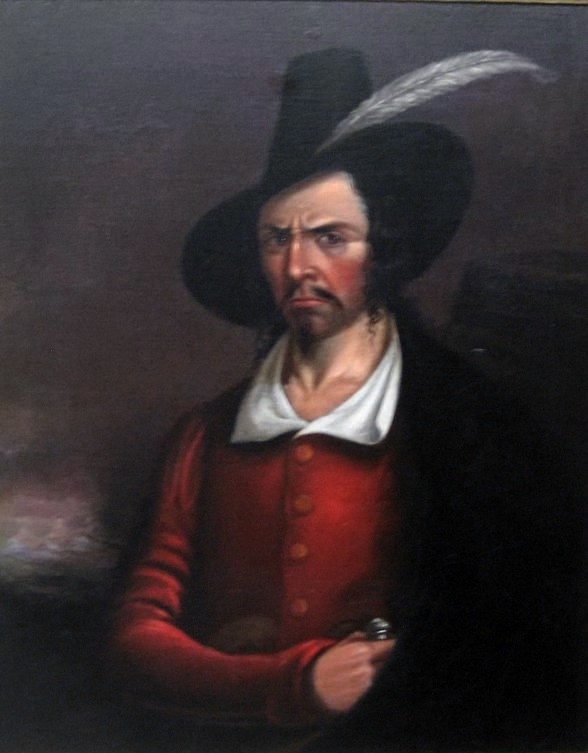

 ast week, Speaker of the House and all-around nice guy Paul Ryan (R-WI) released a
 s Republicans fumble around in the dark trying to


