|
Pressure to Investigate Bush Torture Program Grows |
 |
|
Wednesday, 18 July 2012 16:13 |
|
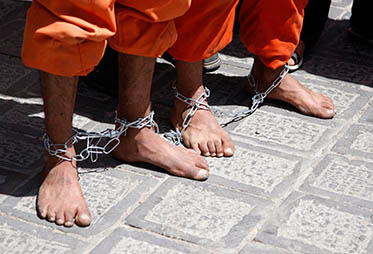
Parry writes: "An international body last week unanimously adopted a resolution condemning US secrecy regarding the CIA's extraordinary rendition program – secrecy that is effectively stonewalling a number of European investigations."

Bush's CIA rendition program is under international scrutiny. (photo: Reuters)

Pressure to Investigate Bush Torture Program Grows
By Nat Parry, Consortium News
19 July 12
 n international body last week unanimously adopted a resolution condemning U.S. secrecy regarding the CIA’s extraordinary rendition program – secrecy that is effectively stonewalling a number of European investigations into the program of secret arrests and torture of terror suspects. n international body last week unanimously adopted a resolution condemning U.S. secrecy regarding the CIA’s extraordinary rendition program – secrecy that is effectively stonewalling a number of European investigations into the program of secret arrests and torture of terror suspects.
The OSCE Parliamentary Assembly – a 320-member organization comprising lawmakers from Europe, North America and Central Asia – adopted the resolution in plenary session on July 9.
Supporting the criminal investigation carried out by Polish authorities into the rendition program and welcoming attempts by British parliamentarians to ascertain the level of the United Kingdom’s involvement, the resolution “insists that the United States Government co-operates with European investigations” and “calls upon the United States to release any pertinent information to appropriate investigators.”
In introducing the resolution on July 6, British parliamentarian Tony Lloyd recalled that when President Barack Obama was inaugurated in 2009, one of his first acts was to issue executive orders prohibiting rendition and torture.
However, Lloyd said, there are “strong evidential trails that suggest members of the OSCE family were involved in this practice of unlawful transfer of prisoners” throughout Europe, the Middle East and Afghanistan. He pointed to cases of prisoners being unlawfully detained by the CIA in Italy and the United Kingdom.
In the UK, Lloyd said, an official inquiry came to a “premature end” despite the fact that the practice of extraordinary rendition is “clearly illegal,” in violation of Article 3 of the Convention against Torture, which has been adopted by every member of the OSCE. He reminded OSCE parliamentarians that there were 1,245 CIA flights from European territory to countries where suspects faced torture.
In March, Polish Prime Minister Donald Tusk confirmed that his country’s former spy chief, Zbigniew Siemiatkowski, is facing criminal charges in connection with a probe by state prosecutors into the Polish role in the CIA’s rendition and secret prison program. The future of the Polish investigation is in doubt, however, with U.S. authorities refusing to turn over relevant documents to the prosecution, reports the Polish newspaper Gazeta Wyborcza.
In April, U.S. intelligence agencies including the CIA and the FBI won a ruling in a U.S. District Court allowing them to continue withholding evidence from British MPs about UK involvement in the rendition. In reaction to this court ruling, Lloyd, who co-chairs the UK All-Party Parliamentary Group on Extraordinary Rendition, said, “It’s an abuse of the spirit of freedom of information.”
Lloyd claimed that the U.S. agencies were trying to avoid official embarrassment on both sides of the Atlantic by using a narrow legal exemption to prevent the disclosure of critical papers. “This is still an ongoing issue,” he said in introducing the resolution last week. “This story of extraordinary rendition is not finished.”
He pointed out that “it is clear that the United States was the author of these practices,” but noted that “it was the United States acting in concert with other members of the OSCE.”
It is therefore “necessary to keep up the political pressure for proper answers,” Lloyd said. “We need to know the truth of what took place. We need to give a strong signal that this type of activity is not something that has any role to play in the fight against terrorism.”
Toward this end, the resolution introduced by Lloyd reminds OSCE member states of their “binding obligations under international law to not only refrain from torture, or inhuman, cruel, humiliating, and degrading treatment; but to also investigate allegations of torture.”
It further calls on all OSCE members to investigate allegations that their territory has been used to assist CIA-chartered flights secretly transporting detainees to countries where they may face torture or other ill-treatment.
Following Lloyd’s introduction, U.S. Congressman Dennis Cardoza, D-California, took the floor largely in support of the resolution, stating that “No country should evade a discussion of its own domestic issues.” He said that the issues of rendition and torture “remain controversial in the United States” and welcomed Lloyd’s attempt to focus attention on the matter.
The debate on the resolution came just after President Obama renewed the U.S. pledge to work with the international community toward ending torture. The White House put out a statement on International Day in Support of Victims of Torture, stating that “the United States rejects torture as unlawful, counter to our values, and inconsistent with the universal rights and freedoms that should be enjoyed by all men, women, and children wherever they live.”
As the Center for Constitutional Rights pointed out, however, the statement “comes after three years of continued efforts by the Obama administration to block any investigation or accountability for U.S. torture practices.”
Nat Parry is co-author of Neck Deep: The Disastrous Presidency of George W. Bush.
 |
|
How America Became a Country That Lets Little Kids Go Homeless |
|
|
Wednesday, 18 July 2012 15:59 |
|
Ganeva writes: "Family homelessness essentially did not exist until the 1980s. And the financial crisis has made the problem massively worse."

Homelessness among children is on the rise in America. (photo: National Center for Children in Poverty)
How America Became a Country That Lets Little Kids Go Homeless
By Tana Ganeva, AlterNet
19 July 12
 t's a searing hot Sunday in the Bronx, and young women and couples with small children sweatily make their way up the ramp to the PATH building, New York City's shiny new intake center, where homeless families with children must go to get placed in shelters. That's the hope at least. A couple that went in right around the time I showed up exits the building about half an hour later, and the man is pissed; it doesn't look like they had any luck today. Everyone looks anxious as they walk up the ramp; clearly this is a situation where there had better be a Plan B if getting themselves and their kids into a shelter is not in the cards. t's a searing hot Sunday in the Bronx, and young women and couples with small children sweatily make their way up the ramp to the PATH building, New York City's shiny new intake center, where homeless families with children must go to get placed in shelters. That's the hope at least. A couple that went in right around the time I showed up exits the building about half an hour later, and the man is pissed; it doesn't look like they had any luck today. Everyone looks anxious as they walk up the ramp; clearly this is a situation where there had better be a Plan B if getting themselves and their kids into a shelter is not in the cards.
A young couple with the cutest twin toddlers I've ever seen walks up and sits on the curb. I point this out to their parents and for a second they beam, but then they go back to looking very worried. This is their 3rd trip to PATH this week. The first two times they were turned away, when their caseworkers decided they should stay with Amanda's mom instead. Her mom disagreed. Now, the couple has come prepared, bearing a letter in which her mom assures the Department of Homeless Services just how unwelcome her daughter and grandchildren are. "Hopefully this time it'll work, and we'll have a place to stay," says Amanda, 18, who took her first trip to PATH at 17, when her mother kicked her out of the house for the first time. "We're hoping to get placed in Brooklyn, where I'm from, but even the Bronx would be fine, as long as we have a place."
The twins are crying the whole time. The man picks up one kid and their heavy luggage flips the stroller on its back, upending the other twin, who starts screaming as the dad frantically tries to right the fallen stroller; no one who comes here is having a very good day. It's tough with the twins inside the building too, because they can't bring in food or water, according to Amanda. "We have to pour out our water bottles before we go inside."
To keep out more dangerous things, the building has a full-on security apparatus with metal detectors in the entry way and harried security guards rushing families through. Hanging from each of their belts is an extendable baton, in case any trouble gets past the metal detectors. Outside, a new family walks up the ramp every five to 10 minutes. One woman's baby is only a week and a half old; she's draped a piece of cloth over his stroller to protect him from the heat.
Candace, 26, is heavily pregnant -- she's going to have a baby girl at the end of July. She's anxious to make her appointment because she really needs a place to stay, but before she goes she politely offers that the new PATH building is nicer than when she first came here at 17.
"Everything's clean, everyone is polite," she says softly, then scrunches up her face. "In the old one there was feces, regurgitations, and flies everywhere."
***
After hurricanes Katrina and Rita hit in 2005, advocates for the homeless were horrified to find that the storms had left one in 50 American kids without a home, a record high, according to a report by the Coalition for Family Homelessness. But only a few years later the financial crisis outperformed nature in casting catastrophe on poor Americans. After record foreclosures, layoffs and budget cuts that hit poor families the hardest, America is a country where one out of 45 kids doesn't have a home. That totals 1.6 million children in 2010 without a permanent place to live, an increase of 448,000 in just three years. Forty percent of the kids are under 6.
"As a society, we bear responsibility for creating this second disaster and for responding to its aftermath," concludes the report, before detailing how many states fall short in working to prevent family homelessness and in taking care of families who've lost their homes.
"Many places in the country don't have shelters," says Diane Nilan, an advocate for the homeless who ran several family shelters in Illinois and since 2005 has traveled around the country raising awareness about homeless families (Hear Us). "In some cases, you have to travel five or six counties over to get to a shelter. Often they're filled or gender-segregated. Then the family has to decide whether to sleep in a car, or to farm the kids out to friends, or split up," Nilan says.
The Southern states, which are also some of the nation's poorest, have the worst access to homeless shelters: of Mississippi's (poverty rate 25.87 percent) 82 counties, only 17 offer a family homeless shelter, according to the Red, White and Blue Booki>which compiles information about services for homeless families. There are 23 in Alabama. Louisiana's homelessness rate doubled between 2007 and 2009, and that year researchers estimated that 30 percent of the state's homeless families ended up sleeping in their cars or in abandoned buildings.
A motel is another less-than-ideal option. "These are families who have jobs paying minimum wage salaries, so they turn to motels, get stuck in this cycle of having to pay all their income for housing to avoid the streets," Nilan says.
Given how little low-income Americans get paid and how much they get charged for rent in many parts of the country, it's actually a miracle that even more families haven't been pushed out of their homes. In California, the average two-bedroom rental requires a $26-an-hour salary while minimum wage in the state is $8, according to a National Low Income Housing Coalition study.
Here's what happened to a family Nilan met in Florida. The parents both worked at restaurants in New Orleans, but Hurricane Katrina wiped out their jobs and their home and sent them to Nashville. When "the floods came back and upended them again," they asked their 8-year-old daughter where she wanted to go. "Disney World!" she said. Not a bad idea, they figured, since tourist traps are filled with restaurants where they could find jobs. But when they got there they couldn't find steady work (Orlando has an 8.7 percent unemployment rate). Sometimes the mom had a job, sometimes the dad did. Mostly the jobs were part-time and temporary. To make ends meet, Nilan says, they rented one of the beds in their motel room to a 53-year-old homeless vet. DIY homeless shelter.
***
An interesting fact about family homelessness: before the early-1980s, it did not exist in America, at least not as an endemic, multi-generational problem afflicting millions of poverty-stricken adults and kids. Back then, the typical homeless family was a middle-aged woman with teenagers who wound up in a shelter following some sort of catastrophic bad luck like a house fire. They stayed a short time before they got back on their feet.
In the 1980s, family homelessness did not so much begin to grow as it exploded, leaving poverty advocates and city officials stunned as young parents with small children overwhelmed the shelter system and spilled into the streets. In New York City, the rate of homeless people with underage kids went up by 500 percent between 1981 and 1995. Nationally, kids and families made up less than 1 percent of the homeless population in the early 1980s, according to advocate and researcher Dr. Ellen Bassuk. HUD estimates put the number at 35 percent of people sleeping in shelters in 2010.
"All of a sudden, around the early 1980s we started to see tons of families who were there because of poverty," Ralph da Costa-Núńez, who worked in Mayor Ed Koch's administration and is now CEO of Homes for the Homeless, tells AlterNet.
The reasons behind the jump in family homelessness are not complex, Núńez says. "It was the gutting of the safety net. Reagan cut every social program that helped the poor. Then there's inflation so their aid checks are shrinking. Where are they going? Into the streets, into the shelters."
The administration was especially keen to cut low-income housing programs. Peter Dreier writes that Reagan created a housing task force, "dominated by politically connected developers, landlords and bankers." They and the president were in agreement that the market was the best way to address housing for the poor, and instituted cuts in government spending that yielded almost instant results. In 1970, Dreier writes, there were more low-income housing units than families who needed them, but "by 1985 the number of low-cost units had fallen to 5.6 million, and the number of low-income renter households had grown to 8.9 million, a disparity of 3.3 million units."
At a 1985 hearing before the Senate subcommittee on housing and urban affairs, Barry Zigas, the president of the National Low-Income Housing Coalition, called the administration's approach toward the poor a "scorched-earth policy." President Reagan offered a sunnier view on the TV show Good Morning America, saying, "What we have found in this country, and maybe we're more aware of it now, is one problem that we've had, even in the best of times, and is the people who are sleeping on the grates, the homeless who are homeless, you might say, by choice."
"I thought we were going to make it to go away," Nunez tells AlterNet. "And one day I had to tell Mayor Koch, this is here to stay."
Continuing in the tradition of his Republican predecessors, President Bill Clinton's tough-love welfare reforms were especially tough on poor women and children. The Temporary Assistance for Needy Families Act, which replaced a New Deal welfare program for the poorest families, put work requirements and time limits on assistance. As Nunez puts it, their benefits would run out and, "Boom! Where do they go? The shelters and the streets."
TANF decreased welfare caseloads from "12.3 million recipients per month in 1996 to 4.4 million in June 2011" according to a National Poverty Center policy brief, a drop that has been touted as a success even though in many cases families just couldn't get access to benefits they needed -- many had not rocketed out of poverty on their bootstraps. Either way, TANF plays out a whole lot differently today than during the Clinton years when the economy was relatively strong.
A New York Times piece titled "Welfare Limits Left Poor Adrift as Recession Hit" details TANF's downsides in our current predicament -- the caseloads stayed the same during record joblessness, and women and kids have had to resort to desperate measures to make it, like skipping meals, scavenging through trash, and going back to abusive relationships.
If they end up without a home -- whether that means they're staying with relatives, or sleeping on the ground, or in their car, or in abandoned buildings, or in shelters -- here is what their lives look like: To start with, the moms are likely to suffer depression, anxiety disorders, or PTSD, because a large percentage of sheltered mothers "have experienced physical and sexual assault over their lifespan," according to the National Child Traumatic Stress Network. Homelessness itself compounds their trauma, especially if they don't get treatment, both because it's stressful to be homeless and because not having shelter makes the families vulnerable to more violence. Being homeless, or the economic or personal horrors that led to homelessness, or being raised by parents fighting mental problems, means that many kids suffer from psychological disorders. "Half of school-age homeless children experience anxiety, depression, or withdrawal compared to 18 percent of non-homeless children," according to the Traumatic Stress network.
"Homeless children worry about where they will sleep on a given night, and if they have a place to sleep, they are afraid of losing it," the Traumatic Stress Network continues. "Older children worry about being separated from friends and pets, and they fear that they will be seen as different among new peers at school. They also worry about their families: their parents, whose stress and tension is often shared with the children, and their siblings, for whom they see themselves as primary caregivers. More than half of homeless children surveyed also said that they worried about their physical safety, especially with regard to violence, guns, and being injured in a fire. One-quarter of homeless children have witnessed violence in the family."
Being adrift is likely to make little boys aggressive and little girls depressed and withdrawn, according to a report by the Family Housing Fund. Homeless children get sick more often than poor children who have a home. They're more likely to have respiratory and digestive infections, stunted growth, anemia, TB, and asthma. They are prone to dangerous chronic conditions like cardiovascular disease, peripheral vascular disease, endocrine dysfunction, or neurological disorders, according to the Family Housing Fund.
School is a disaster. Since many homeless families have to move constantly, the kids get pulled in and out of school and can end up being held back. Often they are too hungry or stressed to learn. It's tough to do homework, even if they've landed in a shelter, because even the mundane becomes stressful. "Let's say you have six to eight families in a shelter, each in a room, and there are two to three kids in a family" says Bassuk. "That's a lot of kids running around. It's chaos. The whole family sleeps in the same room; if one kid gets an earache, nobody sleeps."
"It's so mind-blowing for me," says Diane Nilan. "No matter what we've done -- and I've been involved in significant advocacy efforts to enlighten Congress -- there's this mindset, I don't know if it's denial or what, to totally ignore the people who are the most vulnerable. You see abysmal conditions that little babies are growing up in. They're in the prime period of human development," she says. "It's a horrible, horrible oversight, the way we are neglecting little kids when they need us the most."
***
The tough-love approach still has its fans. In 2004, New York City Mayor Michael Bloomberg unveiled a plan to slash the rate of homelessness in the city by two-thirds in five years. One curious feature of his Five-Year Plan was to limit priority access to federal programs that put homeless families into homes. Struggling New Yorkers, the administration was sure, were hustling the system by showing up at shelters pretending to be homeless in order to grab up federal aid. So priority Section 8 rent assistance was thrown out in favor of bootstrappy initiatives like the Advantage program, which was designed to teach important life lessons about self-sufficiency and financial responsibility by cutting off aid after two years.
A few years later, one in three homeless families that participated in Advantage ended up back in the shelters. As with everything else, the financial crisis made everything worse. "It's not like rents went down in NYC with the recession," Patrick Markee of Coalition for the Homeless tells AlterNet. "The gaps between incomes and rents has gone higher and higher."
The Advantage program train-wrecked when New York state discontinued its part of the funding in 2010. The Bloomberg administration then gave poor families a great lesson in financial responsibility by killing the program and cutting off payments to participating families last February. Right now, 43,000 people are sleeping in municipal shelters in NYC, 17,000 of them children. It's a 10 percent increase from last year and the highest number since the Great Depression.
"You've got more families than ever," Markee says. "The shelter system is bursting at the seams."
|
|
|
Presto! The DISCLOSE Act Disappears |
|
|
Written by <a href="index.php?option=com_comprofiler&task=userProfile&user=15946"><span class="small">Bill Moyers, Moyers & Company</span></a>
|
|
Wednesday, 18 July 2012 09:49 |
|
'Without disclosure we have little idea of all the big businesses that are buying our democracy.'

Portrait, Bill Moyers. (photo: Robin Holland)
Presto! The DISCLOSE Act Disappears
By Bill Moyers, Bill Moyers & Company
19 July 12
sk any magician and they’ll tell you that the secret to a successful magic trick is misdirection - distracting the crowd so they don’t realize how they’re being fooled. Get them watching your left hand while your right hand palms the silver dollar: “Now you see it, now you don’t.” The purloined coin now belongs to the magician.
Just like democracy. Once upon a time conservatives supported the full disclosure of campaign contributors. Now they oppose it with their might - and magic, especially when it comes to unlimited cash from corporations. My goodness, they say, with a semantic wave of the wand, what’s the big deal?: nary a single Fortune 500 company had given a dime to the super PACs. (Even that’s not entirely true, by the way.)
Meanwhile the other hand is poking around for loopholes, stuffing millions of secret corporate dollars into non-profit, tax-exempt organizations called 501(c)s that funnel the money into advertising on behalf of candidates or causes. Legally, in part because the Federal Election Commission does not consider them political committees, they can keep it all nice and anonymous, never revealing who’s really behind the donations or the political ads they buy. This is especially handy for corporations - why risk offending customers by revealing your politics or letting them know how much you’re willing to shell out for a permanent piece of an obliging politician?
That’s why passing a piece of legislation called the DISCLOSE Act is so important and that’s why on Monday, Republicans in the Senate killed it. Again.
Why? Senate Majority Leader Harry Reid: “Perhaps Republicans want to shield the handful of billionaires willing to contribute nine figures to sway a close presidential election.” The election, he said, may be bought by “17 angry, old, white men.”
The DISCLOSE Act is meant to pull back the curtain and reveal who’s donating $10,000 or more not only to super PACs but also to trade groups like the U.S. Chamber of Commerce and these so-called “social welfare” non-profits that can spend limitless cash on campaigns as long as it’s less than half the organization’s total budget.
The New York Times recently cited a report by the Center for Responsive Politics and the Center for Public Integrity finding that “during the 2010 midterm elections, tax-exempt groups outspent super PACs by a 3-to-2 margin with most of that money devoted to attacking Democrats or defending Republicans.” We’re talking in excess of $130 million. What’s more, the Times reported, “such groups have accounted for two-thirds of the political advertising bought by the biggest outside spenders so far in the 2012 election cycle ... with close to $100 million in issue ads.”
We know a few of the corporations that are contributing, but just a few, and that’s only by accident or via scattered governance reports, regulatory filings and tax returns. The insurance monolith Aetna, for example, gave more than $3 million to a pro-Republican non-profit called American Action Network, which spent millions on ads attacking Obama’s health care plan - even though, publicly Aetna supported the president. The Chamber of Commerce has pledged to spend at least $50 million on this election. Its contributors include Dow Chemical, Prudential Financial and MetLife.
But they’re just the tip of the proverbial iceberg. Without disclosure we have little idea of all the big businesses that are buying our democracy - and doing their best to drown it at the bottom of the sea.
All of this, of course, is more blowback from the horrible Supreme Court Citizens United decision, which unleashed this corporate cash monster. Just this week, Justice Richard Posner of U.S. Seventh Circuit Court of Appeals - a Republican and until recently, no judicial liberal - said that Citizens United had created a political system that is “pervasively corrupt” in which “wealthy people essentially bribe legislators.”
Nonetheless, at the time of the ruling two and a half years ago, eight of the nine justices also made it clear that key to the decision was the importance of transparency. Justice Anthony Kennedy wrote, “The First Amendment protects political speech and disclosure permits citizens and shareholders to react to the speech of corporate entities in a proper way.”
One of the DISCLOSE Act’s biggest opponents isn’t buying that argument. Senate Minority Leader Mitch McConnell, who used to say, “We need to have real disclosure,” has changed his tune. Now that conservatives and the GOP are able to haul in the big bucks, he claims that divulging the identity of corporate donors would be the equivalent of creating an “enemies list,” like the one Richard Nixon kept to punish his foes and settle political scores. Here’s what McConnell said in a speech at the conservative American Enterprise Institute last month:
“This is nothing less than an effort by the government itself to expose its critics to harassment and intimidation, either by government authorities or through third party allies… That’s why it’s a mistake to view the attacks we’ve seen on ‘millionaires and billionaires’ as outside our concern. Because it always starts somewhere; and the moment we stop caring about who’s being targeted is the moment we’re all at risk.”
McConnell’s not the only one - every Republican voted to kill the DISCLOSE Act, including fourteen who just a couple of years ago supported it. Groups like Ron Paul’s Campaign for Liberty smell an un-American conspiracy lurking behind the demands for disclosure. So do the National Rifle Association and FreedomWorks - the Tea Party organizers originally funded by David Koch - each of which warned senators that their votes on the DISCLOSE Act will be included in the scorecards they keep, recording each ballot they don’t approve like pins in a voodoo doll.
Their outrage is ridiculous and hypocritical. These non-profits are just another magic trick, an illusion intended to obscure the fact that these are monumental slush funds, plain and simple. As The Washington Post noted in an editorial this week:
“We seem to have created the political equivalent of secret Swiss bank accounts… In their lust for contributions, in cozying up to the moneybags of this era, candidates and political operatives in both parties seem to be forgetting that they put their own credibility at risk.”
Contrary to Senator McConnell’s view, this is more corrupt and covert than anything that happened during Watergate. The public has a right to know who’s behind the hundreds of political ads with which we’re being bombarded this year, who’s giving what to whom - not to mention our right to try to connect the dots and figure out what their motives are.
The good news is that people are fighting back. On July 5th, California joined state legislatures in Hawaii, New Mexico, Rhode Island and Vermont calling for a constitutional amendment to reverse Citizens United. The Senate Judiciary Committee is holding hearings July 24th and the state of Montana, which recently had its law barring corporate spending in elections struck down by the Supreme Court, has put a voter initiative on its November ballot, also calling for a constitutional amendment.
Lee Drutman at the non-partisan Sunlight Foundation quotes the father of our Constitution, James Madison, who warned, “A popular government without popular information or the means of acquiring it, is but a Prologue to Farce or Tragedy or perhaps both.” Drutman goes on to point out that, “The Declaration of Independence wasn’t signed by Anonymous. Those who sign the big checks should have the very same courage in their convictions.”
Amen.
|
|
Putting an End to Secret Campaign Contributions |
|
|
Tuesday, 17 July 2012 15:54 |
|
Franken writes: "Today, unless I'm pleasantly surprised, Republicans will once again block the Senate from considering the DISCLOSE Act. But let me back up."

Portrait, Senator Al Franken. (photo: Jeffrey Thompson/Getty Images)
Putting an End to Secret Campaign Contributions
Sen. Al Franken, Reader Supported News
17 July 12
 oday, unless I'm pleasantly surprised, Republicans will once again block the Senate from considering the DISCLOSE Act - a piece of legislation that would bring at least a modicum of transparency to our badly broken campaign finance system. oday, unless I'm pleasantly surprised, Republicans will once again block the Senate from considering the DISCLOSE Act - a piece of legislation that would bring at least a modicum of transparency to our badly broken campaign finance system.
But let me back up.
Every citizen of a democracy is supposed to have the same say in the decisions our government makes (or, at least, in who gets to make those decisions on our behalf). That's why each of us gets the same number of votes in an election (one). I grew up in Minnesota, where we treasure our tradition of civic engagement - and our record of having the nation's highest voter participation.
Of course, in a country where running for office is incredibly expensive, the ability to spend money to support candidates and causes (both by contributing directly to them and by making "independent expenditures" on their behalf) is another way to have a say.
But while we each have the same number of votes to cast, we don't each have the same amount of money to give. And for decades, we've debated how to best protect our democratic principles despite that disparity.
Reformers (like me) have argued that we should limit how much influence any one person can gain by limiting how much money any one person can spend. The idea being that unlimited money in politics is inherently corrupting.
Opponents of such reform have disagreed vehemently. The idea being that money is speech - and since free speech should be unlimited, so should money.
But until lately, there has always been bipartisan agreement that campaign spending - limited or not - should at least be transparent. Even as they've fought against spending limits designed to clean up our elections, many conservatives have solemnly assured the American people that they understood sunlight to be the best disinfectant. (In Minnesota, for example, we've had a long and bipartisan tradition of transparency in our campaign finance system.)
Then, in Citizens United, the Supreme Court overturned a century of precedent to find that the right to have a say over elections wasn't, in fact, reserved for citizens after all - corporations could enjoy it, too. And in FreeSpeechNow.org v. FEC, the Court found that even the weak limits we'd established to prevent the powerful from completely dominating our elections were unconstitutional.
Barring a constitutional amendment (which involves, shall we say, formidable hurdles), a change of heart on the part of the current Justices (extremely unlikely, given their recent ruling in the Montana campaign finance case), or a change in the composition of the Court (not really up to us), reformers have lost the argument over spending limits by a final vote of 5 to 4.
In the 2010 election, these "independent expenditures" by outside groups - organizations established under obscure provisions of the tax code with names using words like "Future," "Prosperity," and/or "Freedom" in various permutations - totaled more than $280 million, more than double what they spent in 2008 and more than five times what they spent in 2006. Outside groups spent more than the actual Democratic and Republican party committees.
And already in 2012, we've seen a single individual write multi-million-dollar checks in support of his favorite presidential candidate. We've seen corporations spend tens of millions of dollars on attack ads. We could see $1 billion in outside spending before Election Day.
Worse, there is little sunlight to be found in the post-Citizens United political system. Corporations that want to hide their spending can create shell corporations to contribute unlimited money to a group - so that when you look at the outside group's fundraising records (which are published only occasionally), you'll see the shell corporation but not the original source of the money.
And that guy who wrote all those seven-figure checks to support his favorite presidential candidate? We only know about that because he announced it himself (adding that some of his future spending would remain secret).
And because none of this spending is transparent, none of these spenders (or the candidates who profit from their spending) can be held accountable. We simply don't know who is wielding all this financial power in this year's elections. We just know it isn't us, the people. That's a system in need of disinfecting.
Which brings me back to the DISCLOSE Act. This bill doesn't overturn Citizens United. It doesn't limit how much money individuals or corporations can spend on independent expenditures. All it does is require that this spending be disclosed publicly. It reflects what used to be a bipartisan consensus around the effectiveness of transparency and disclosure in avoiding corruption.
But today - unless, again, I'm pleasantly surprised - all the Republicans in the Senate, including those who have specifically called for more disclosure in our system, will once again block it from proceeding.
In our country, a few have a lot more money than the rest. In our political system, money is power. And that means a few can have a lot more power than the rest. That's bad news for everyone else - and for our democracy itself. And although we've always argued over how best to prevent that from happening, today's vote is yet another sign that some have decided to embrace that shift instead.
Reader Supported News is the Publication of Origin for this work. Permission to republish is freely granted with credit and a link back to Reader Supported News.
|
|



 isconsin held